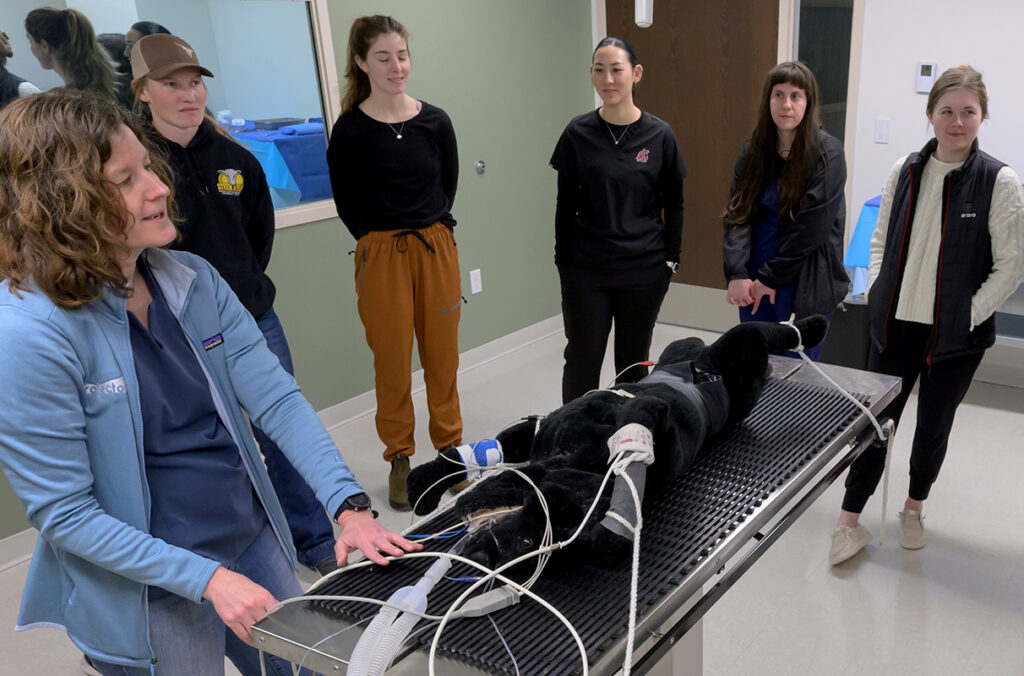
Following an $8 million renovation, Washington State University now holds the keys to one of the most advanced simulation spaces in veterinary education.
WSU’s new 11,000-square-foot space for its Simulation-Based Education program — located on the first and second floors of Bustad Hall on its Pullman campus — enables students to practice core surgical skills like suturing, intubation, and spay and neuter techniques by using a collection of the latest and most advanced medical models and technology in the field. The facility also includes a full workshop to create and alter models for common medical scenarios ranging from diagnostic procedures and surgery to anesthesia and critical care.
The new simulation center is the latest upgrade to WSU’s veterinary medicine simulation program and the first and only program specific to veterinary medicine accredited by the Society for Simulation in Healthcare.
“So much of the work veterinarians do involves stressful situations caring for patients in difficult circumstances,” said Dr. Julie Cary, veterinary educator and director of WSU’s simulation program. “For our students, and for the sake of animals that are going to be cared for, exposure to models and increasingly more complex simulated scenarios that mimic what they will encounter in their careers make our students more effective as graduate doctors.”
The lab features space to practice common procedures and tasks such as draining abscesses, tying surgical knots, performing ultrasounds, and placing catheters and IVs.
In addition to modernized collaborative learning spaces, the center includes a Clinical Skills Lab nearly triple the size of the old one.
The lab gives students, residents, interns, and technicians a space to practice skills on models that replicate common procedures and tasks such as draining abscesses, tying surgical knots, performing ultrasounds, and placing catheters and IVs. The space is equipped with surgical sinks for students to scrub in as well as video capture technology to allow students to review their time in the lab and recognize where they made mistakes.
“Even learning to scrub in for surgery is an important skill that requires knowledge, awareness of small changes in body posture, and how to maneuver around sterile and non-sterile obstacles,” Cary said. “We can now record multiple students at the same time, and zoom in on individuals so students can see how they did and learn where it may have gone wrong.”
Adjacent to the skills lab, two full operating rooms equipped with the same recording technology offer students an immersive and realistic clinical environment. These spaces will be integral for practicing a variety of simulated medical scenarios.
For example, second-year veterinary students take an anesthesia course that uses special software created at WSU to replicate anesthetic monitoring equipment and readings that can be manipulated by a technician in the adjacent control room. Using cases based on real clinical situations, students interact with a veterinary mannequin and environment in the same way they would with a live patient. The consequences of making mistakes, however, are lower and seen as learning opportunities.
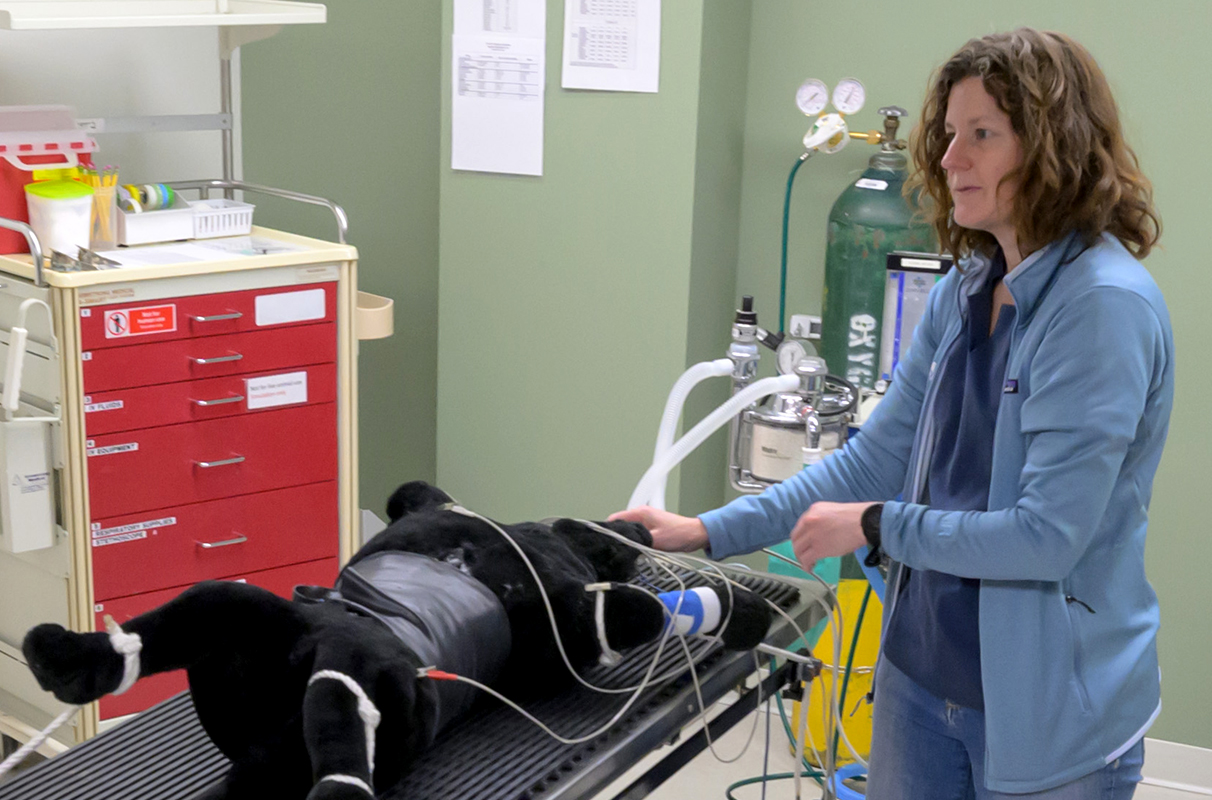
The bright and open configuration of the simulation suite and debriefing spaces allows for more effective and efficient learning.
“Teamwork is vital in veterinary medicine, but the tight space made it hard for teams to effectively work together,” Cary said. “We won’t have that problem anymore.”
On the first floor of Bustad Hall, the new workshop will allow staff a centralized space to respond to needs and requests for new animal models.
“We will now have the space to build and create models on a more regular basis, keeping us ahead of the growing number of students using the skills spaces. The new space also gives us the opportunity for more skill trainers and models available at all times for the students,” said Lethea Russel, a member of the simulation team who has led model creation at WSU for 10 years.
Adjacent to the workshop is the large animal clinical skills and simulation space that houses WSU’s life-size large animal models.
Cary said the simulation center will prepare students for some of the field’s most stressful moments, while also providing those without much clinical experience the opportunity to build their skillsets.
“It’s tremendously important for student equity, students who haven’t had as much clinical exposure can get that opportunity,” said Cary. “This allows us to even the playing field.”