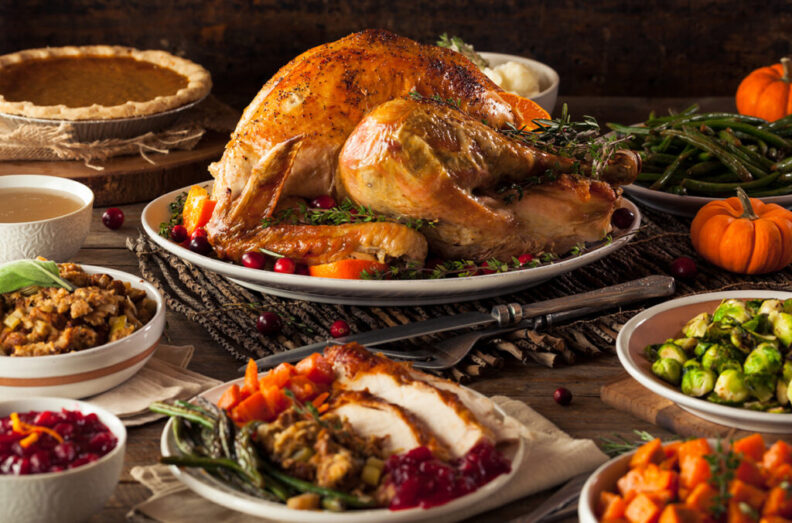
The serene picture of family and friends gathered around a bounty of beloved dishes on Thanksgiving belies the complex and occasionally chaotic food preparation process.
Cooking a whole turkey can be unwieldy in a home kitchen, while the sheer number of side dishes and desserts leaves oven space at a premium. And then there’s the matter of managing leftovers.
Whether cooking one side dish or carefully crafting a cornucopia fit for a full house, it’s important to keep in mind the principals of safe food preparation, said Stephanie Smith, a statewide consumer food safety specialist and associate professor with WSU’s School of Food Science.
Failing to following best food safety practices poses series risks. The U.S. Centers for Disease Control and Prevention estimates that foodborne illness sickness 48 million Americans every year, with 128,000 requiring hospitalization and 3,000 dying as a result of foodborne diseases.
Keeping in mind basic food safety pillars helps ensure everyone getting together this Thanksgiving will emerge from their food comas feeling happy and healthy.
Turkey
The traditional centerpiece of a Thanksgiving meal, turkey has several pitfalls from a food safety perspective, Smith said.
For one, its often bought frozen, meaning individuals have to take certain precautions in the days leading up to Thanksgiving. Best practice is to defrost a turkey in the fridge, with it usually taking one day per 4–5 pounds. A defrosted bird can last a day or two inside the fridge.
Smith advises against defrosting by leaving the turkey out on the counter, which can lead to uneven defrosting and warm spots that can support the growth of pathogens.
The food danger zone — the range when bacteria can grow on food and lead to illness — is between 40 and 140 degrees Fahrenheit.
Defrosting meat by placing it in warm water is also not advised due to the chance of areas entering the danger zone. If defrosting using water, it should be under 70°F with the water being changed every 30 minutes and the sink and surrounding area cleaned thoroughly afterwards.
There’s no need to wash poultry prior to cooking, as doing so risks spreading germs in the sink and surrounding area, potentially contaminating nearby surfaces and dishes.
All poultry should be cooked to 165°F, and Smith recommends using a standalone thermometer rather than relying on the pop-ups found on many commercial turkeys. One way to hasten the cooking process and achieve a more even cook across all parts of the bird is to butterfly the turkey by removing the backbone and pressing it flat.
Side dishes
While tradition dictates that stuffing be cooked inside the chest cavity of a turkey, doing so risks it not reaching the appropriate 165°F needed to kill any pathogens found inside the surrounding poultry. Smith recommends cooking stuffing separately, or if you are committed to cooking it inside the bird, removing it when the bird is done and finishing it in a pan or on a sheet tray.
Many beloved Thanksgiving sides involve canned goods, so it’s important to check these cans prior to use to ensure there are no major dents or bulges. A similar eye should be cast on the fresh vegetables to ensure there is no mold growing. Any mold found on a piece of fruit or vegetable should be discarded. If a moldy potato is found within a larger bag, the rest of the spuds should be carefully inspected, washed, scrubbed and the skins removed.
All vegetables should be washed under cold running water prior to use, with thick-skinned vegetables brushed to remove soil and other debris.
Finally, raw dough containing uncooked eggs and flour should be not consumed. This is because of the risk of E. coli and similar bacteria, which are killed in the cooking process.
Leftovers and storage
How long cooked food can be left out as well as the life of leftovers are two common topics Smith is asked about around this time of year.
All cooked food should be refrigerated within two hours of being served. Consumers risk food entering the danger temperature range by leaving it out longer. The best course is to break down leftovers into shallow dishes to ensure they are able to quickly cool down. Putting something like a large pot of soup into the fridge won’t cool it down quickly enough, potentially heating up the entire fridge and putting all of the food in the temperature danger zone, Smith said.
Leftovers kept in the fridge are generally safe to eat for between three and five days. Anything that won’t be eaten before that time should be frozen. Beyond five days in the fridge, consumers risk microorganisms finding a home in their favorite leftovers and increasing the chance of food poisoning.
For more food safety tips, visit WSU Extension’s Consumer Food Safety website.