At WSU, our faculty make contributions to the research enterprise every day of the year. These faculty are not only outstanding in their fields, but their research and creative practice reaches out from the university to the public we serve making real impacts on the lives of people in Washington and beyond. Each month the Office of Research will highlight some of our talented faculty discussing their research and creative practice in their own words.
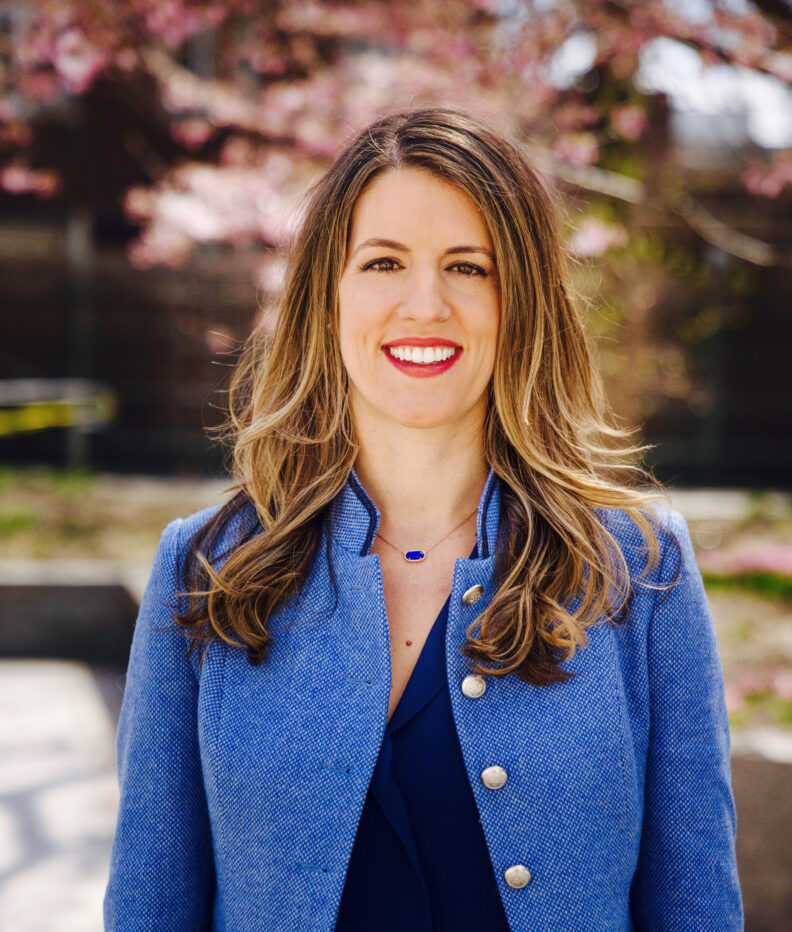
Jennifer Henrichsen, assistant professor
Edward R. Murrow College of Communication, WSU Pullman
What are you currently researching?
My two research tracks focus on: (1) the ongoing erosion of democratic society amidst rising populism, authoritarianism and constitutional rot by assessing how malicious actors wield emerging technologies alongside analog methods to denigrate and disrupt journalistic work, safety, and well-being, and (2) how to strengthen trust in knowledge systems and institutions by enhancing journalists’ and news organizations’ abilities to meet the challenges, threats, and attacks facing them.
To that end, I’m working on numerous research projects, including several papers and projects.
Social media posts can and are picked up by pundits and others, who then amplify the content in other channels ─ including in mainstream and alternative media ─ thereby amplifying disinformation across the broader media ecosystem, with negative implications for the public and democratic society.
Jennifer Henrichsen, assistant professor at the Edward R. Murrow College of Communication
Currently, I have five papers under review. These papers address topics of journalism safety, security, surveillance, and legitimacy. For example, one of my co-authored articles examines discursive violence in Mexican and U.S. press coverage of journalist deaths, while another article evaluates how journalists develop mental models around security. A third paper analyzes strategic information operations against journalists and a fourth paper assesses how journalists were surveilled by the Stasi during the Cold War. I also have a co-authored an article that examines how journalists negotiate their legitimacy and authority in the digital age. I have three more papers in preparation as well as three projects related to security and surveillance that are in the data collection phase. I’m a co-editor of two special issues for journals. One special issue is about digital well being, security, and safety of journalists globally and the other special issue is about media under fire amidst far-right digital hostility. I am also working on two books – one is solo-authored, drafted and under review, and the other is a co-edited volume about legislative attacks against journalism globally that is in the proposal stage.
Additionally, in the last six months, I’ve had several publications:
- In October 2024, I published a co-edited book titled National Security, Journalism, and Law in an Age of Information Warfare (Oxford University Press).
- In January 2025, I published a co-authored an article with a former graduate student about “Confronting Violence Against Journalists in Mexico: Strategies of resistance in Mexican and U.S. Press Coverage of Journalist Killings” in the peer-reviewed journal, International Journal of Communication.
- In February 2025, I published a co-authored article about “Disruptions in Normalization: Reflexive Monitoring in Journalism Adaptation and its Relationship with Audiences” in the peer-reviewed journal, Journalism Studies.
- In March 2025, I published a co-authored report titled, “From News Deserts to Nonprofit Resilience: Assessing the Health of Washington’s Local News Ecosystem.” This nearly 100-page report involved open-source data collection, a survey, and semi-structured interviews to assess the Washington news ecosystem. It is geared toward a policymaker, journalist, and academic audience and it complements the ongoing Murrow News Fellowship program, funded through appropriations by the Washington state legislature.
What is the role social media has played in misinformation? Are there other forms of media that have dealt with misinformation?
The issue here is not just misinformation, but also disinformation. Social media platforms have a major role in propagating misinformation (false information spread erroneously) and disinformation (false information spread with the intent to deceive), contributing to a polluted information ecosystem that deceives the public and erodes trust in media. This problematic environment has intensified following several platforms’ decisions to remove fact checkers, even though some platform heads like Mark Zuckerberg at Meta acknowledge that doing so will result in more harmful content being disseminated online. It is well known that social media content laced with lies, negativity, and anger spreads more quickly than factual information. Social media posts can and are picked up by pundits and others, who then amplify the content in other channels ─ including in mainstream and alternative media ─ thereby amplifying disinformation across the broader media ecosystem, with negative implications for the public and democratic society.
What role does power and politics play in journalism? How can journalists combat this to tell truthful and accurate stories that need to be told?
Power and politics can play a role in journalism. News organizations tend to be commercial enterprises, which means commercial logics can impede or encroach on editorial independence and news judgment. There is a case unfolding right now where CBS was sued by Donald Trump over its reporting in a “60 Minutes” segment. Legal experts have suggested there is no legal case, but CBS’s parent company Paramount Global has reportedly considered settling. This might be because Paramount has a proposed merger with Skydance Media, which will have to be approved by the Trump administration. That said, Paramount Global recently filed a new motion to get the lawsuit dismissed. Meanwhile, the journalists and the show’s executive producer have insisted they produced fair reporting.
In another recent case, the current presidential administration removed Associated Press (AP) reporters and photographers from the group of journalists who follow the president in the pool and to other events, because the AP continued to use the name the Gulf of Mexico for its international audiences, despite the recent presidential executive order stating it is now the Gulf of America. The AP has sued the administration for punishing a news organization for using speech it doesn’t like and to regain access to events so it can do its job. The U.S. Constitution guarantees free speech without political interference, so it is extremely unusual for an administration to ban a news agency for what it says and for not using words that the government demands.
Members of the public can support journalists and journalism by buying subscriptions to news organizations, by treating journalists with respect and not harassing them online, and by donating to nonprofit organizations.
Jennifer Henrichsen, assistant professor in the Edward R. Murrow College of Communication
Politicians and other high-profile individuals also use social media platforms to harass journalists, intimidate them, and encourage self-censorship. These attacks can escalate into doxing, or when private information like your phone number and address are published, and other escalations of harm.
Journalists need support amidst these attacks so they can continue to engage in accountability reporting and do their jobs. Members of the public can support journalists and journalism by buying subscriptions to news organizations, by treating journalists with respect and not harassing them online, and by donating to nonprofit organizations like the Reporters Committee for Freedom of the Press (RCFP), which provides pro bono legal services to journalists around the country. For their part, journalists need to uphold ethical standards and practices of reporting and seek support to prevent or mitigate attacks.
As the result of threats and attacks on journalism over the last eight years, how can news organizations support journalists to continue to report on current events while also ensuring their safety and access to information?
Journalists have experienced threats and attacks for more than eight years. The nonprofit organization, the Committee to Protect Journalists (CPJ), first started documenting attacks against journalists globally in 1992. In the United States, digital and physical threats and attacks have been increasing since the Obama administration, with significant escalations during the first Trump administration and now again during the second Trump administration. From physical assault and arrests to lawsuits and online harassment and surveillance, journalists face myriad challenges and attacks for simply doing their jobs. Unfortunately, news organizations are increasingly strapped for financial resources, and this tends to impede their ability to provide physical safety and digital security support to their journalists. News organizations need to communicate with one another about the challenges and attacks their journalists are facing so that organizations can learn from one another and brainstorm solutions that are derived from lived experience and are successful. Additionally, news organizations could seek assistance from nonprofits like CPJ, RCFP, and the Freedom of the Press Foundation, which provides digital security training on a sliding scale to U.S. news organizations and journalists. It’s important for journalists to know that they are not alone when facing abuse and that there are organizations dedicated to helping them mitigate the threats and attacks against them.
What drew you to WSU?
As a native Washingtonian, I’ve long known about the Edward R. Murrow College of Communication’s excellent reputation in journalism, education, and practice. As I was finishing my Ph.D. at the University of Pennsylvania, I was looking for a tenure track professor position at an R1 institution that could bring me closer to my family and give me the space to engage in pioneering research. So, I was thrilled when I successfully matched at WSU.
For more information: