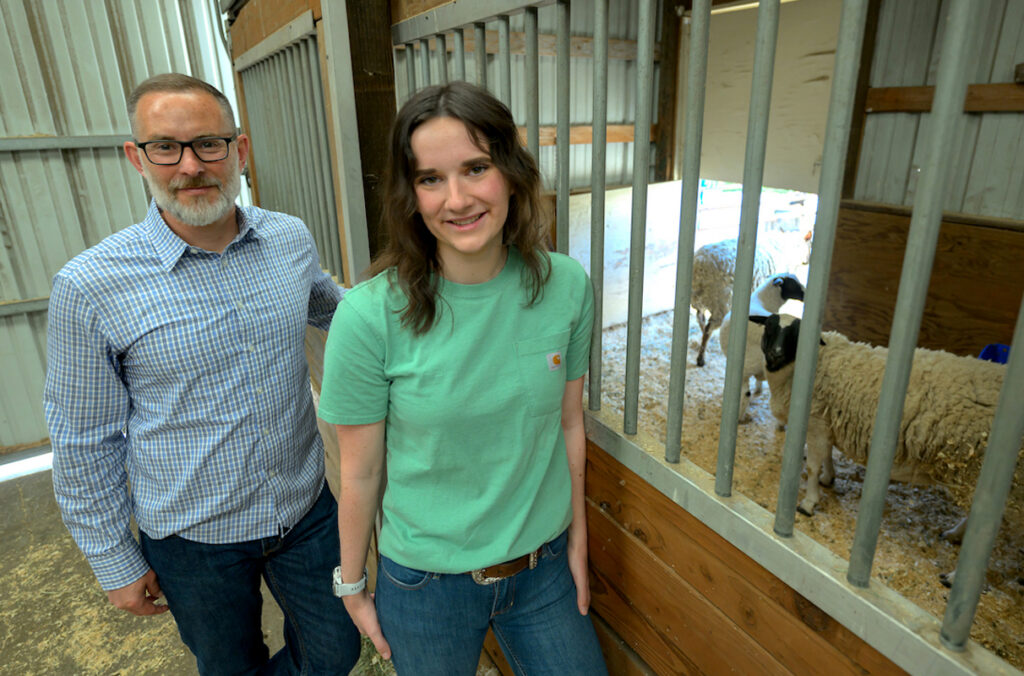
Washington State University veterinary student Hanna Meyer has been awarded a prestigious summer fellowship during which she will attempt to use gene-editing techniques to make cattle resistant to a deadly and economically costly respiratory pathogen.
Meyer was one of just 15 veterinary students selected worldwide this year for the Veterinary Student Research Fellowship awarded by the Foundation for Food and Agriculture Research (FFAR) and the American Association of Veterinary Medical Colleges (AAVMC). Fellows gain hands-on research experience that prepares them for careers in animal science and public service, ultimately benefiting farmers and consumers. Meyer’s fellowship comes with a $12,000 research grant. She is the first WSU student to receive the honor.
Now entering her second year in WSU’s Doctor of Veterinary Medicine program, Meyer hopes to successfully use CRISPR gene-editing tools to alter a genetic mutation in bovine embryos that makes cattle vulnerable to Mannheimia haemolytica, the primary bacterial cause of bovine respiratory disease. The illness, which can be fatal, is responsible for significant losses in the cattle industry due to poor meat quality and reduced productivity.
“If we are able to successfully edit this mutation, it will be really great for producers — and it will prevent a lot of suffering in the animals as well,” Meyer said. “Bovine respiratory disease is one of the biggest economic burdens on cattle operations.”
The three-month fellowship provides veterinary students with opportunities rarely available during the course of a traditional veterinary education. Each fellow receives a research grant and is paired with a faculty mentor to support hands-on learning and career development. Students will present their findings at the national Veterinary Scholars Symposium, attended by more than 700 veterinary students, researchers, and leaders from top veterinary programs.
Meyer’s summer research is being conducted in partnership with WSU’s College of Veterinary Medicine Summer Research Fellowship. She will work under the guidance of regents professor Jon Oatley, who also serves as associate dean for research in WSU’s College of Veterinary Medicine. Oatley is renowned for his work in gene-editing technologies and his research efforts on genetic innovations in livestock to address the growing demand for sustainable food production.
If successful, the modified embryos will be implanted in the fall, potentially leading to the birth of calves with a disease-resistant genome in the spring.
“This will be my first time working with CRISPR, so I’m looking forward to tackling the associated learning curve,” Meyer said. “If the CRISPR strategy is successful, there will be a calf born in the spring with a genome I edited, which I think is incredible.”
Originally from Seattle, Meyer is part of WSU Honors College’s Pre-Admit Program in Veterinary Medicine, in which a student can gain early admission to WSU’s Doctor of Veterinary Medicine program and become a veterinarian in only seven years. Her undergraduate degree will be in animal science.
“Livestock is one area I haven’t worked too much in, so I’m excited to explore that,” she said. “This fellowship is another great opportunity that’s been given to me. Since I’ve come here, it’s felt like one opportunity after another. The professors are always looking out for students — they genuinely want us to succeed.”