Research is a core part of WSU’s mission to advance knowledge and positively impact our region, state, nation, and world.
A well-functioning research university requires up-to-date physical facilities, infrastructure, and libraries, as well as strong administrative and compliance support for faculty, students, and staff to engage in externally-sponsored projects.
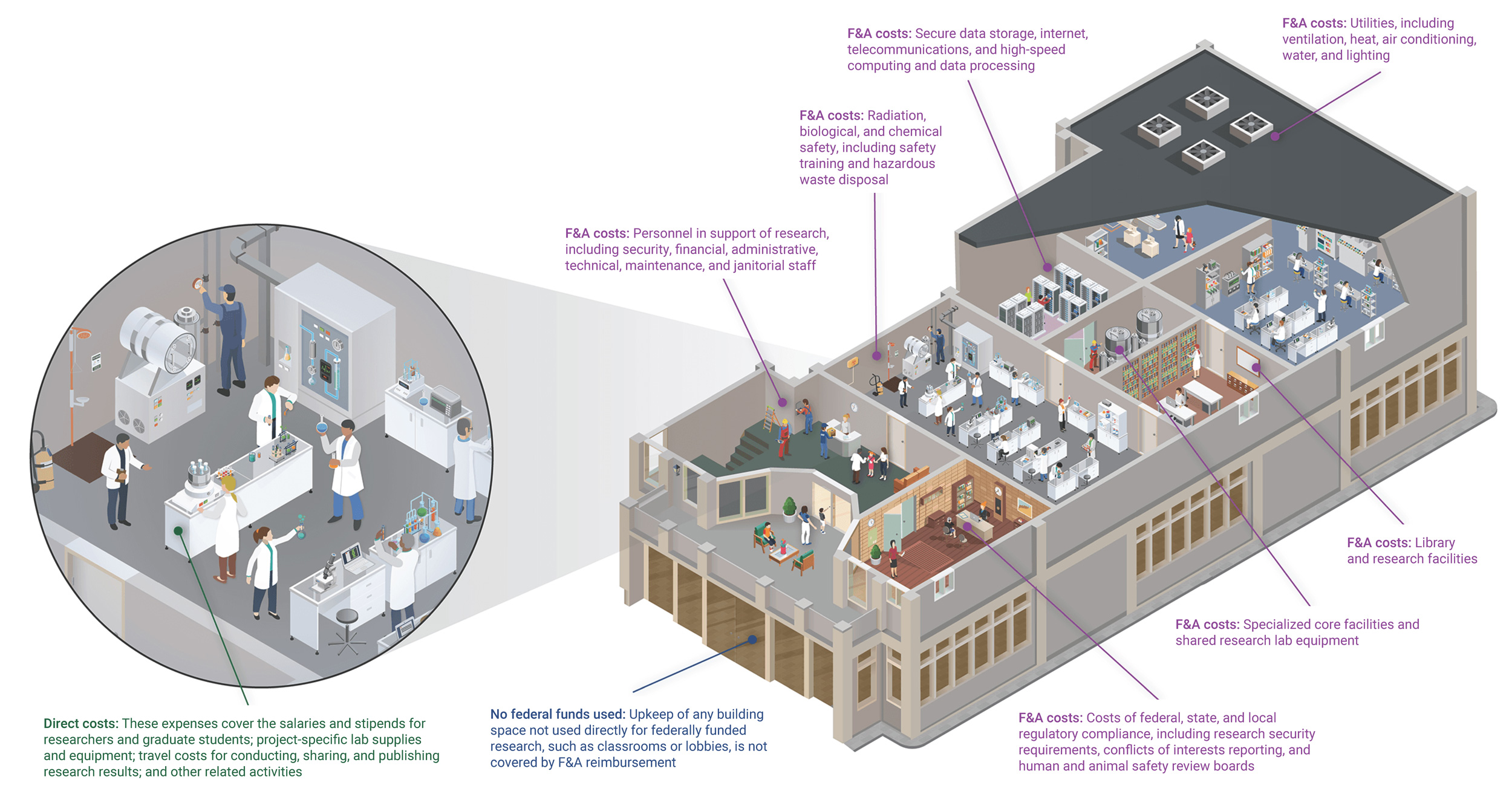
University research infrastructure may include construction and maintenance of sophisticated labs designed for cutting-edge research; utilities such as light and heat; telecommunications infrastructure; hazardous waste disposal; and the operational apparatus necessary to comply with numerous rules and regulations.
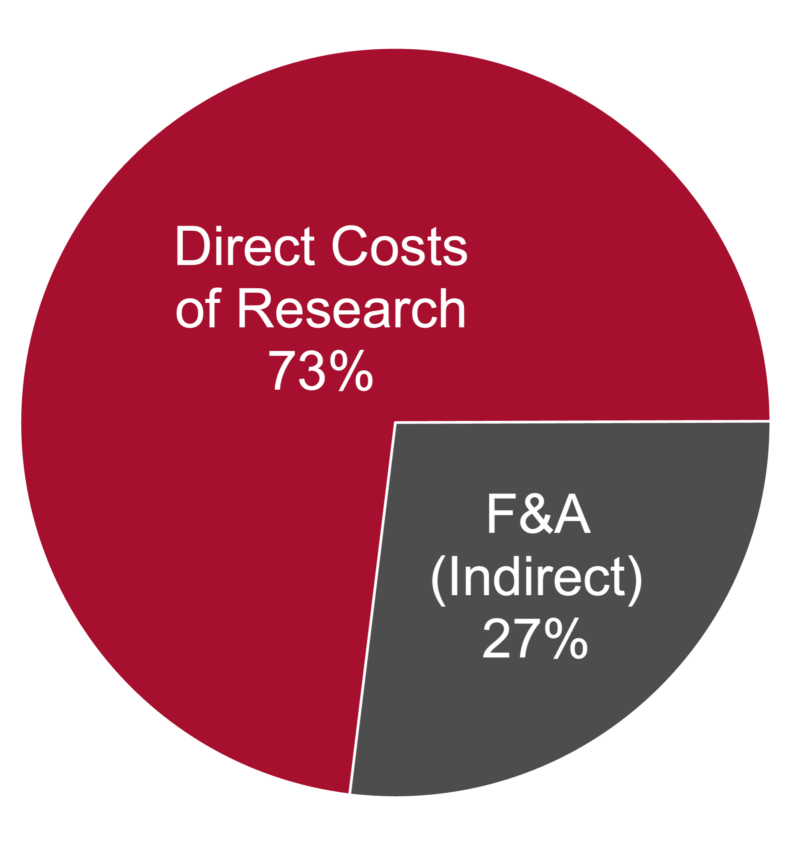
The costs to build, maintain, and manage these resources are facilities and administration costs, or “F&A” — also known as indirect costs (“IDC”) — as opposed to the direct costs of research: equipment, researcher salaries, lab supplies, etc.
F&A costs are paid by the University. Many federal and non-federal sponsors and funders commit to sharing these costs by reimbursing the University according to negotiated F&A rates. A list of WSU’s federal rates is maintained by Sponsored Program Services.
The short video below from the Council on Government Relations (COGR) illustrates the importance of these costs and reimbursements.
Frequently Asked Questions
Because there is a cost to doing research, F&A costs, also known as indirect costs (IDCs), are essential for helping to build and support the required infrastructure for research. F&A costs are reimbursements for expenses incurred in support of research activities and are calculated as a percentage of direct research costs. So, while F&A doesn’t support researcher salary, grad students, equipment or supplies, they do cover expenses in support of research, including:
- Research labs
- Data processing
- Library subscriptions
- Security protections e.g. export/import controls
- Human and animal research participant protections
- Lab safety
- Hazardous waste disposal
- Support personnel for essential administrative and compliance
- Maintenance staff
The long-standing and successful partnership between universities and the federal government grew out of World War II and the government now relies on universities to conduct research that is in the national interest. The research is aimed at meeting specific national goals such as health and welfare, economic growth, and national defense. This research has associated expenses that would not otherwise exist for universities that also assume the risk of building the necessary support infrastructure. In turn, research faculty are anticipated to successfully compete for federal research grants that will, in turn, reimburse a part of the associated infrastructure costs.
No. As defined by the federal government, F&A costs cover expenses incurred by research activities, so it is impossible to profit from F&A cost reimbursements. In fact, F&A costs do not even fully reimburse the expenses that result from providing necessary infrastructure and support to conduct research activities. Additionally, F&A costs are only based on funded research space and related research activities, not education or other university facilities or activities.
No. F&A expenses cannot be itemized for individual grant and other research awards and contracts because F&A costs are reimbursements of the aggregated total costs incurred for thousands of individual awards that faculty and institutions annually receive. The sheer volume of grants, contracts, and other awards received by universities from various federal agencies, many of which are small in size, means having an established F&A rate makes the grant process more efficient as opposed to negotiating a new F&A rate for every grant, award, or contract.
Federal agency officials and university administrators predetermine an overall percentage of allowed F&A cost reimbursements based on documented historical costs and regular cost analysis studies. The overall figure is ultimately calculated as a percentage of the amount the federal government awards for direct research costs with rates varying from institution to institution due to factors such as age and condition of facilities and buildings, amount of renovation and/or construction required to house certain research projects, and regional costs of construction, maintenance, utilities, and administration.
Foundations categorize some items as direct expenses that federal rules require to be counted as F&A expenses, which underscores that direct and F&A costs are all part of, and inseparable from, total incurred research/creativity activity costs and makes comparing foundation and federal government F&A categories an “apples to oranges” comparison. Historically, and to this day, most foundations view their grants as supplementing pre-existing federal and non-federal research and, to the extent that a foundation does not pay for certain F&A expenses, these costs must be covered by the institution.
FAQ adapted from the Association of American Universities (AAU).
How is F&A allocated at WSU?
Reimbursed F&A costs become revenue to the University and are governed by WSU’s Policy for Allocating Facilities and Administrative Cost Recovery Funds (Executive Policy #2) which provides background on F&A, oversight, goals for transparency, allocation, etc. As described in Executive Policy #2, WSU’s F&A is split as shown in the flowchart below:
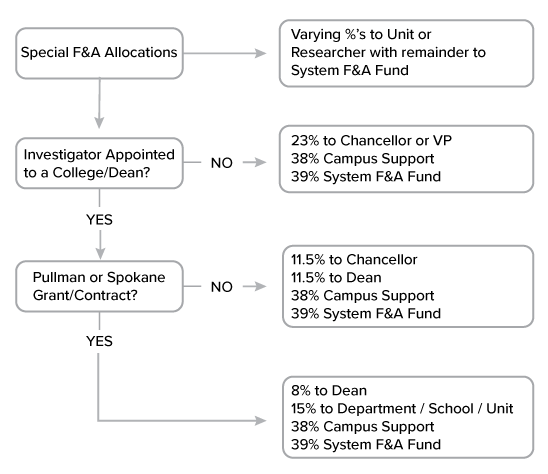
For further details about WSU’s F&A costs and splits, as well as additional examples and charts, please see Executive Policy #2.
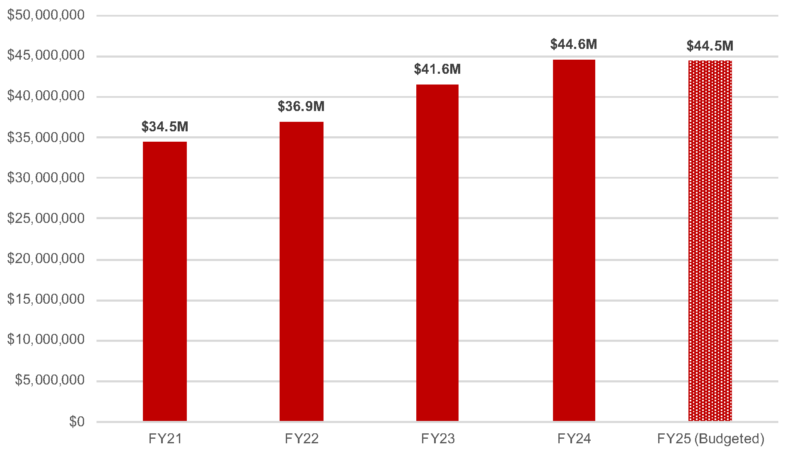
What is WSU’s F&A revenue?
The chart below illustrates WSU’s F&A revenues over the past few years.
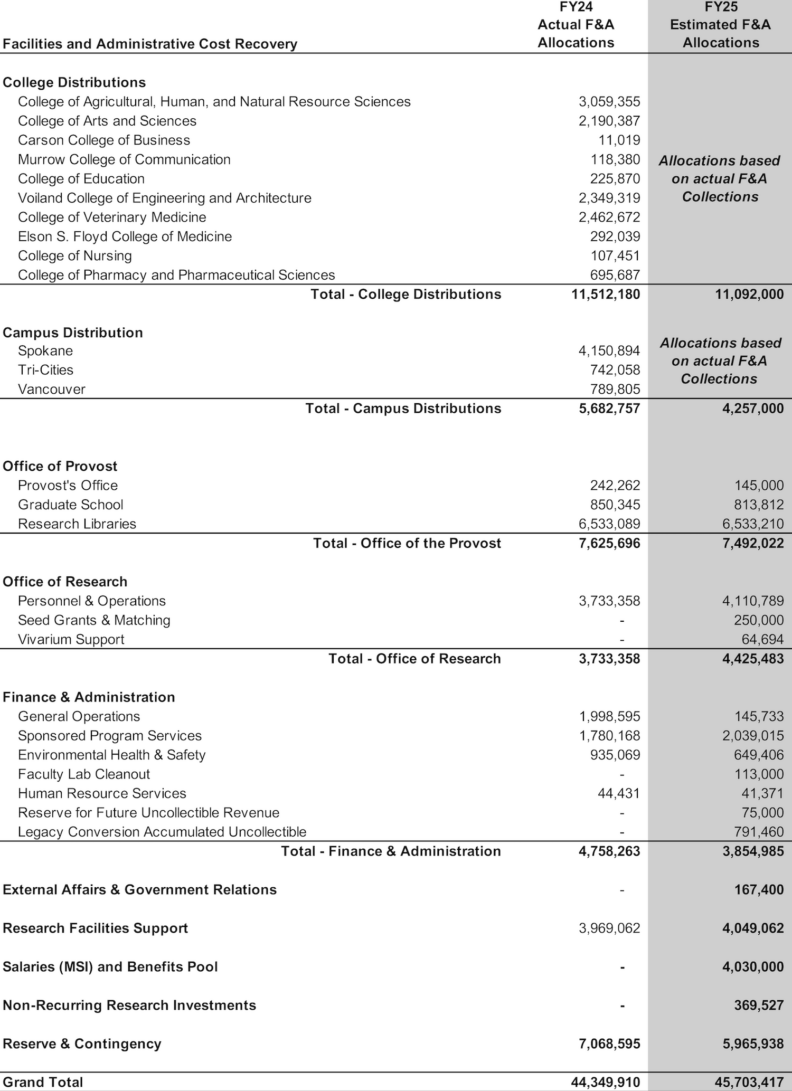
The table below provides more detailed F&A data from FY24 actual allocations and FY25 estimated allocations.
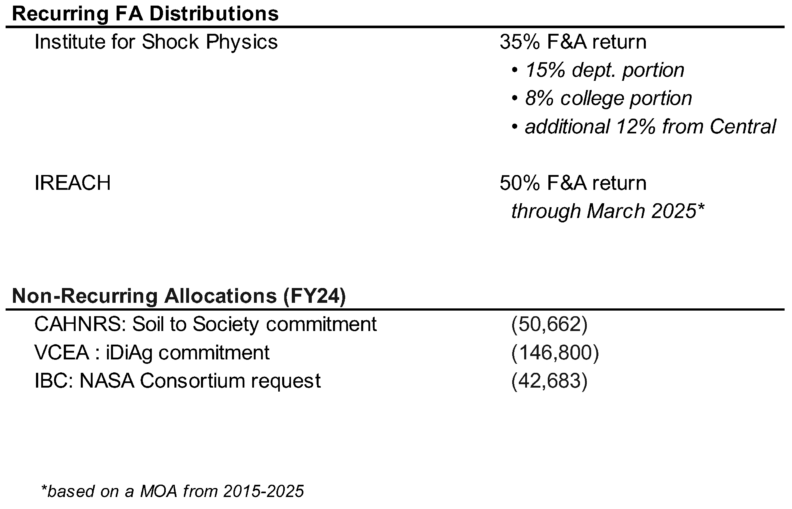
In addition, the table below lists recurring and non-recurring distributions and allocations.